Running has evolved from our primitive form of locomotion to now being a recreational pastime. Minimalist footwear has seen a big increase in the athletic and running world in the last decade in it’s attempts to replicate a more natural barefoot design. Minimalist footwear has been noted for it’s ability to limit runner related overuse injuries, alter the runner’s foot stride for a more softer impact and to increase the runner’s foot muscle growth.
The barefoot style of running is characterized by running in a very thin flexible soled shoe that allows for free toe movement and is characterized by a short stride and lighter step. With the change in running style the runner ceases to land on the heal and begins to land on the forefoot creating a more gentle landing which does not have such an impact on the joints,tendons, muscles and bones. Despite the series of modifications of the modern running shoe, endurance runners are still often plagued with overuse injuries. The minimalist running style which highlights short strides and mid foot or forefoot striking could limit these injuries. If a runner would like to proceed with minimalist running it is advised that they proceed with caution and at a gradual pace to avoid acute injury. Proper running gait is critical to absorb the impact of the ground with reaction forces that can reach 1.5 to 3 times the body weight of the runner and thus dissipate force throughout the kinetic chain of muscles,ligaments,tendons and bones (Fields, Sykes,Walker and Jackson,2010).
Minimalist running is quite a new trend and most of the claims of less injuries are only supported through anecdotal reports. Forefoot or mid foot striking does however show to cause less impact on the runner’s body which could lead to fewer injuries. Standard running shoes however feature cushioning and elevated heals which cause many runners to have their heels hitting first which is known as heel strike. When compared with barefoot runners who tend to land with mid foot or forefoot striking runners have less discomfort from landing on hard surfaces. Lieberman states that when running barefoot, one lands on the fourth and fifth metatarsal and then the heal goes down which leads to converting energy into rotational energy. Where heal striking results in the heel coming to a stop durning the running process(2010).
A noted and researched factor about minimalistic running has been that it increases the strength of the forefoot muscles as well as the strength of the arch. Cheung’s (2014) research found that runners in his experimental group exhibited significantly larger leg and foot muscle after transitioning from standard running shoes to minimalistic footwear. Foot muscle growth was mainly contributed by the forefoot but not the rearfoot muscle. In a 12 week training regime with minimalistic shoes an increase was seen of the abductor digiti minimi of 18% to 22% as well as an 80% increase in longitudinal arch stiffness(Nigg,2009).
In conclusion, runners that are interested in transitioning to minimalist running shoes should transition very slowly over a long period of time to avoid potential stress injuries in the foot. First practicing landing on the mid foot instead of the heel and using a smaller stride and be conscious of making the landing gentle and relaxed. Choosing a more natural footwear can cause less impact on the knee and ankle joints, strengthen the foot arch and increase muscle mass of the forefoot which may have therapeutic and performance implications for runners.
References
Cheung, Roy.(2014). Landing pattern and vertical loading rates during first attempt of barefoot running in habitual shod runners. Human Movement Science, 34. doi: 10.1016/j.humov.2014.01.006.
Fields, K. B., Sykes J., Walker K., Jackson J.(2010).Prevention of running injuries. Current Sports Medicine, 9, 176-82.

Online Yoga Classes
I am currently offering Online Yoga Classes via zoom. These classes are for any mother regardless of if you have a teenager or a 6 week old. It is simply important to care for your body so that you can care for your loved ones. This was inspired by my good friend Melanie in South…

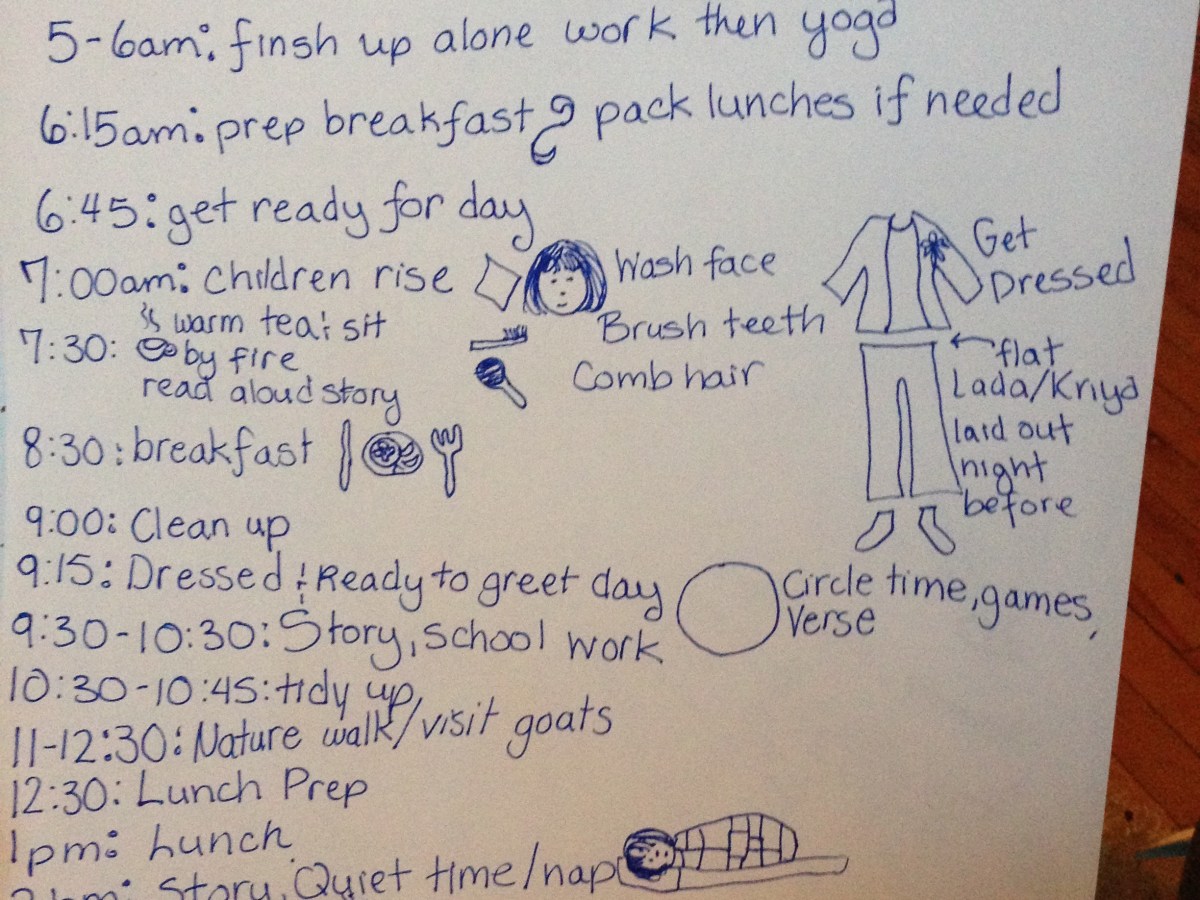
Family Rhythm
Dear families, I hope you have all been finding some light in our current situation and are able to joy amidst the chaos. This week we are working with creating rhythm in our home life. We start with observing our own natural rhythms. What time your family wakes up, tends to eat at, times you find…
 Love Sprouts